Products
Crafted for Quality and Sustainability



Products
Crafted for Quality and Sustainability
Capabilities
From Farm To Fashion
Why Brands Choose BTC
Driven by Value, Powered by Excellence

Vertical Integration
End-To-End Textile Manufacturing Solutions

Sustainability
Eco-Innovation At Every Stage
News & Blogs
Explore Latest Fashion & Textile Industry Insights
Events & Engagements
Experience Leading Fashion & Textile Events & Trade Shows
About Us
Knitting the Future with African Cotton
Contact Us
We’d Love to Hear From You



Copyright© 2026, Benin Textile Corporation
Home / Blogs / From Factory to Market: How Integrated Manufacturing Can Simplify Apparel Supply Chains
Blogs



Summary
Benin Textile Corporation (BTC) connects the journey from locally sourced cotton to finished garments through vertically integrated manufacturing in Benin’s GDIZ. By combining textile production, garmenting, traceability, 3D sampling, and international logistics, BTC helps apparel buyers simplify coordination, improve production visibility, and serve global markets.
Table of contents
For apparel brands, retailers and distributors, the journey from raw material to finished garment can involve multiple suppliers, locations and handoffs. Cotton may be sourced in one market, spun and knitted elsewhere, processed at another facility and then sent to a separate garment manufacturer.
For sourcing and supply-chain teams, every additional stage adds another supplier or interface to coordinate. It can also make it harder to maintain visibility across production, respond to changing requirements and keep the journey from raw material to finished garment connected.
The journey can be viewed simply as:
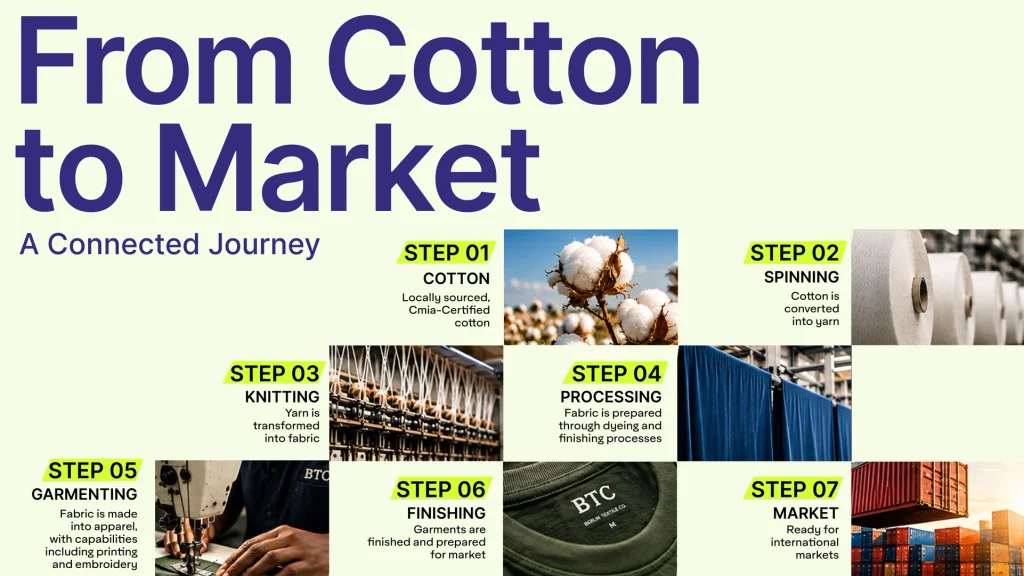
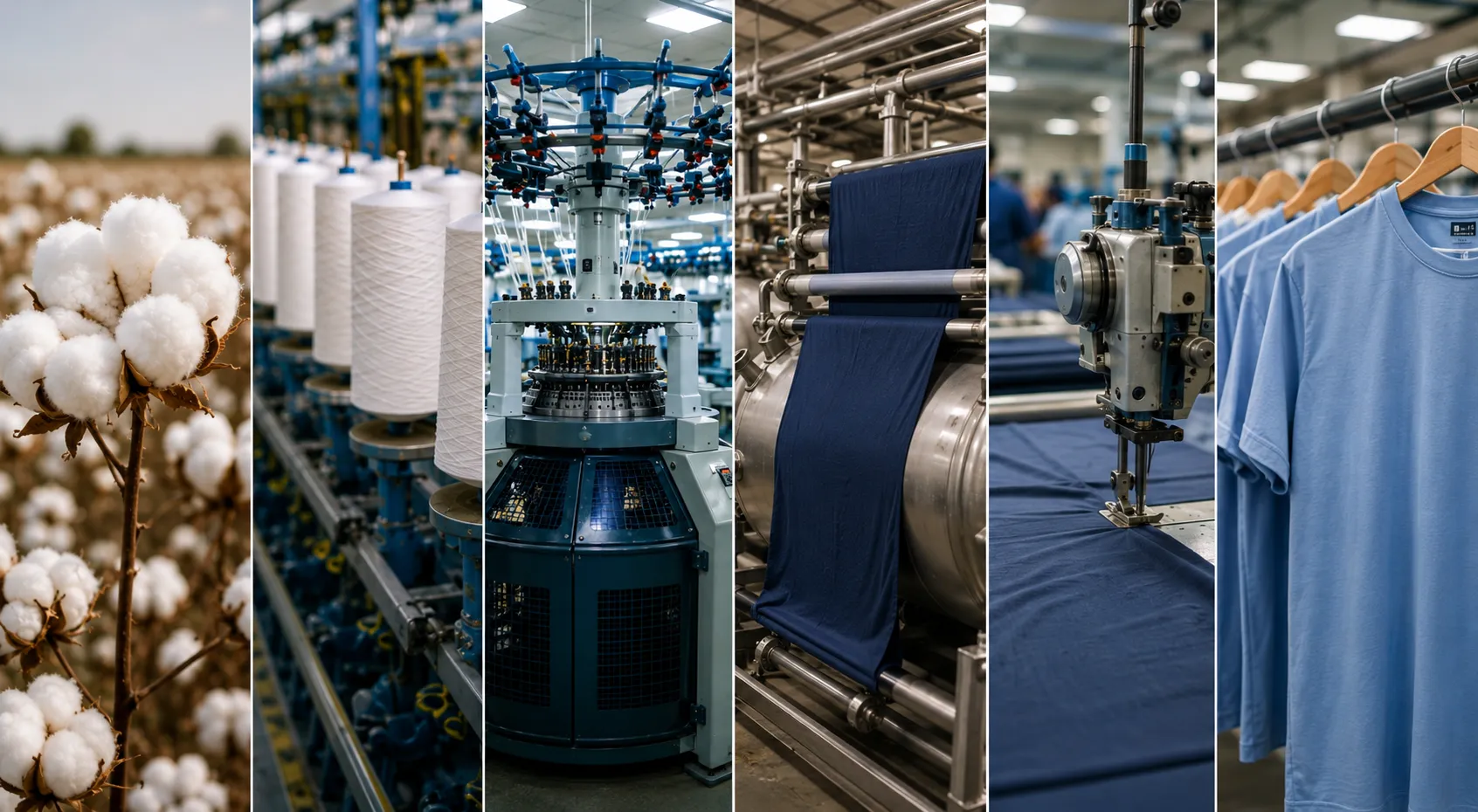
Cotton → Spinning → Knitting → Processing → Garmenting → Finishing → Market
Understanding how these stages connect, and what that means for buyers, is key to understanding the value of an integrated manufacturing model.
Benin has long been an important source of cotton. The next stage of its industrial development is about capturing more value from that raw material by processing it into yarn, fabric and finished apparel closer to its source.
That transition is already underway. Benin’s textile sector grew 9.3% in 2025, while the country’s economy grew 8.1%. The African Development Bank points to the development of the Glo-Djigbé Industrial Zone (GDIZ) and the shift towards higher-value exports as important elements of this industrial transformation.
For apparel supply chains, this shift has practical relevance. More stages of textile and garment production are being developed within the region, creating opportunities to connect raw material, textile production and garment manufacturing more closely.
BTC is part of this development, connecting rain-fed, non-GMO, CmiA-certified local cotton with textile and apparel manufacturing within the wider GDIZ ecosystem.
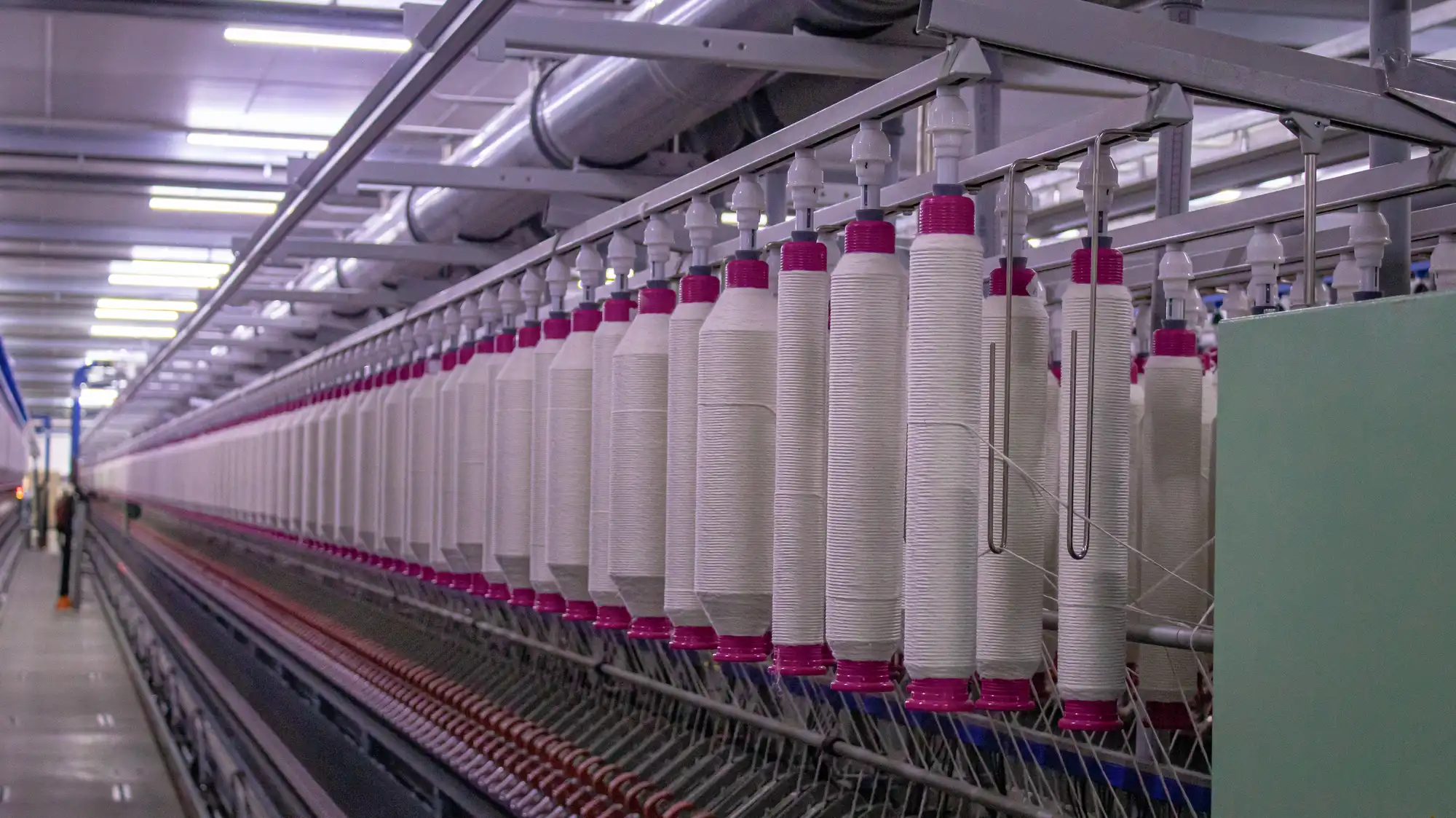
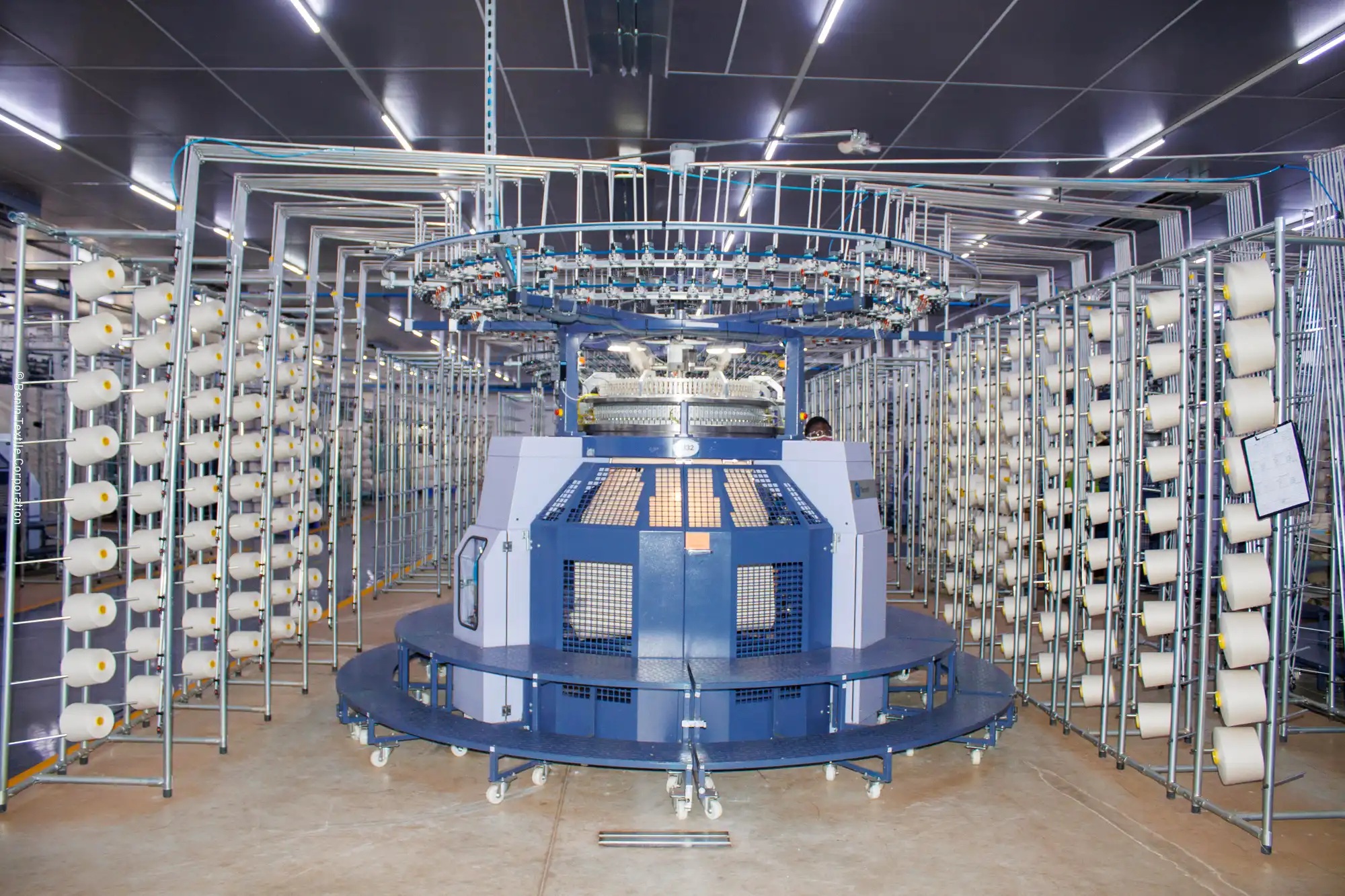
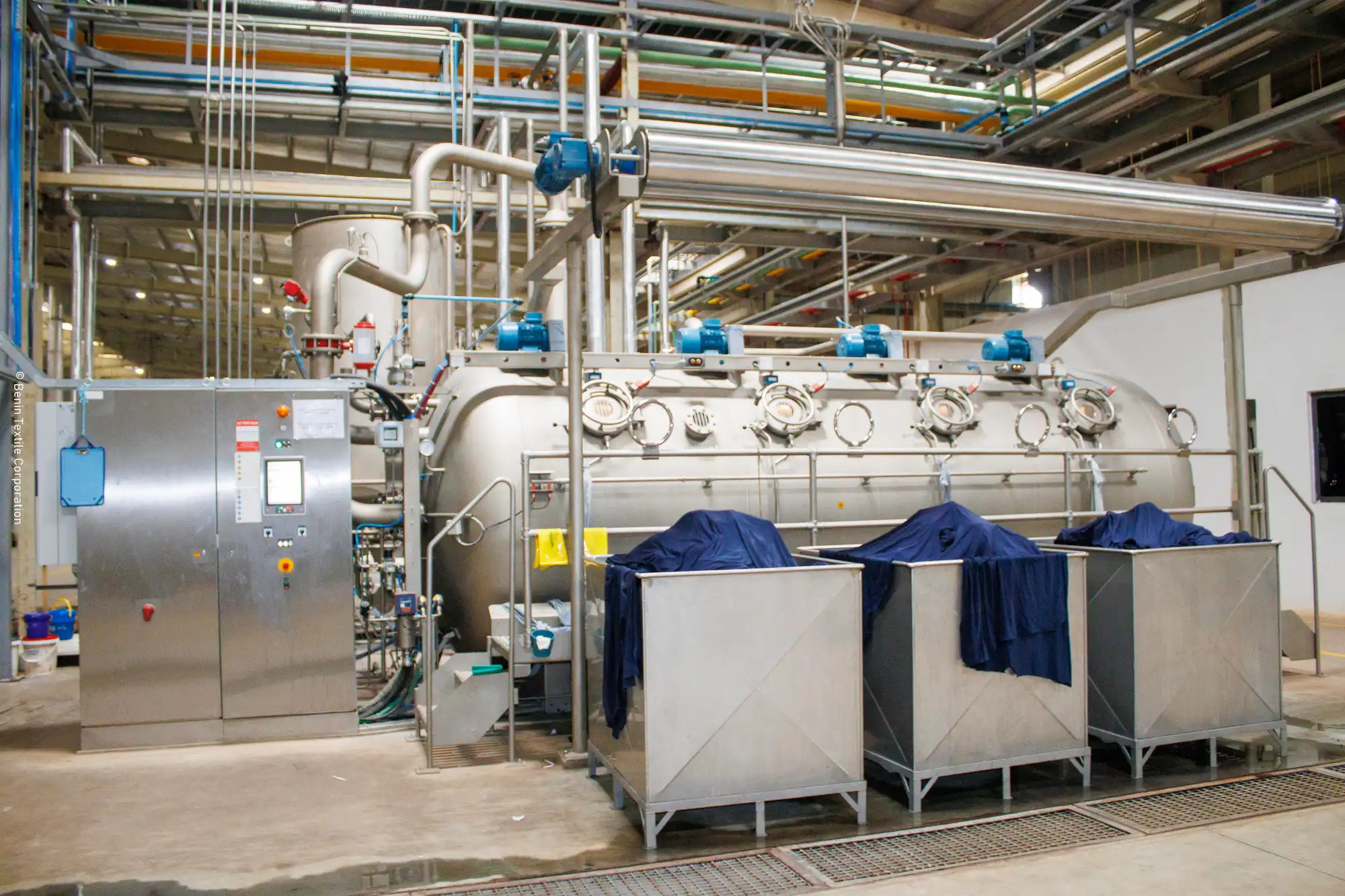
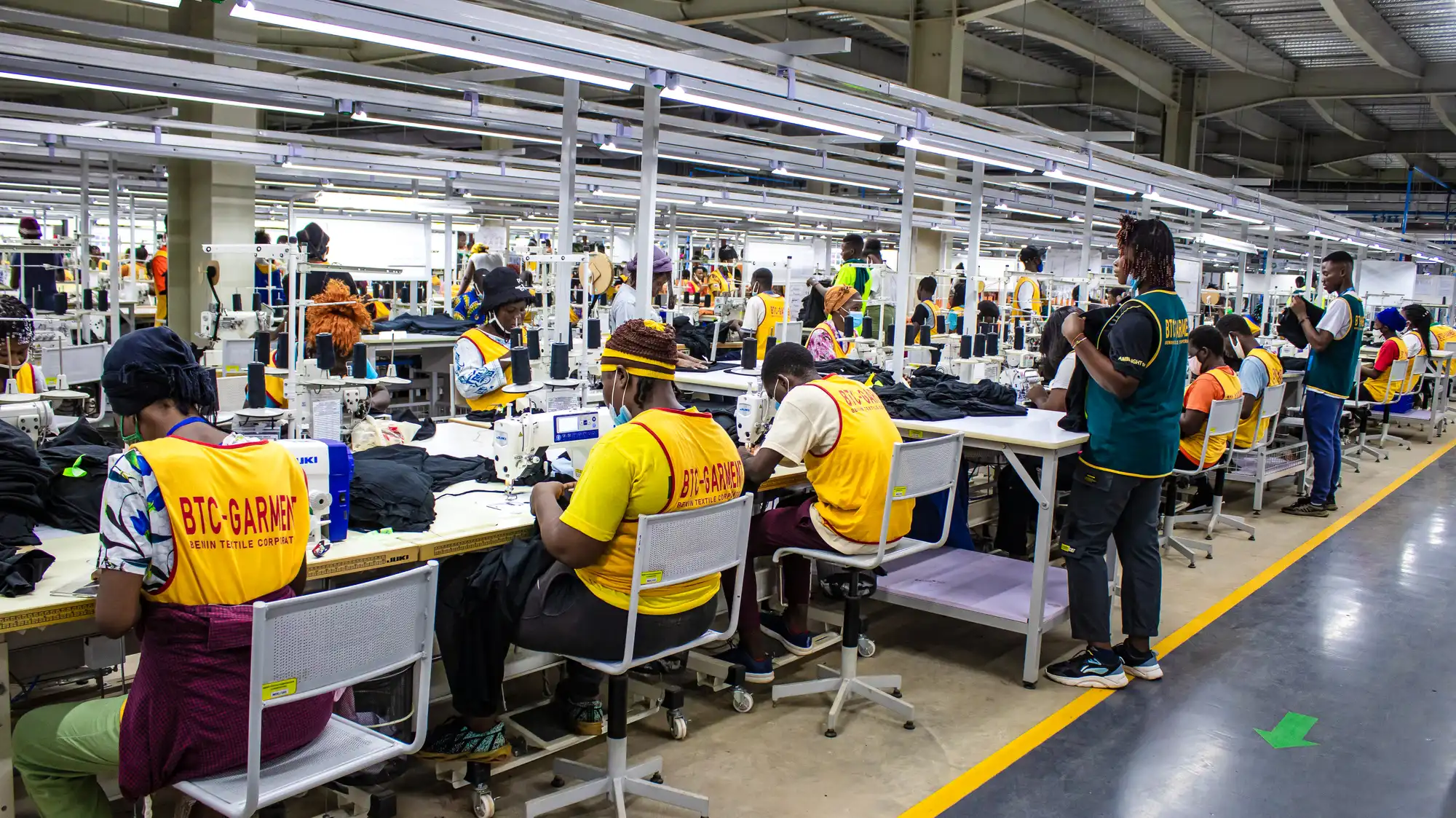
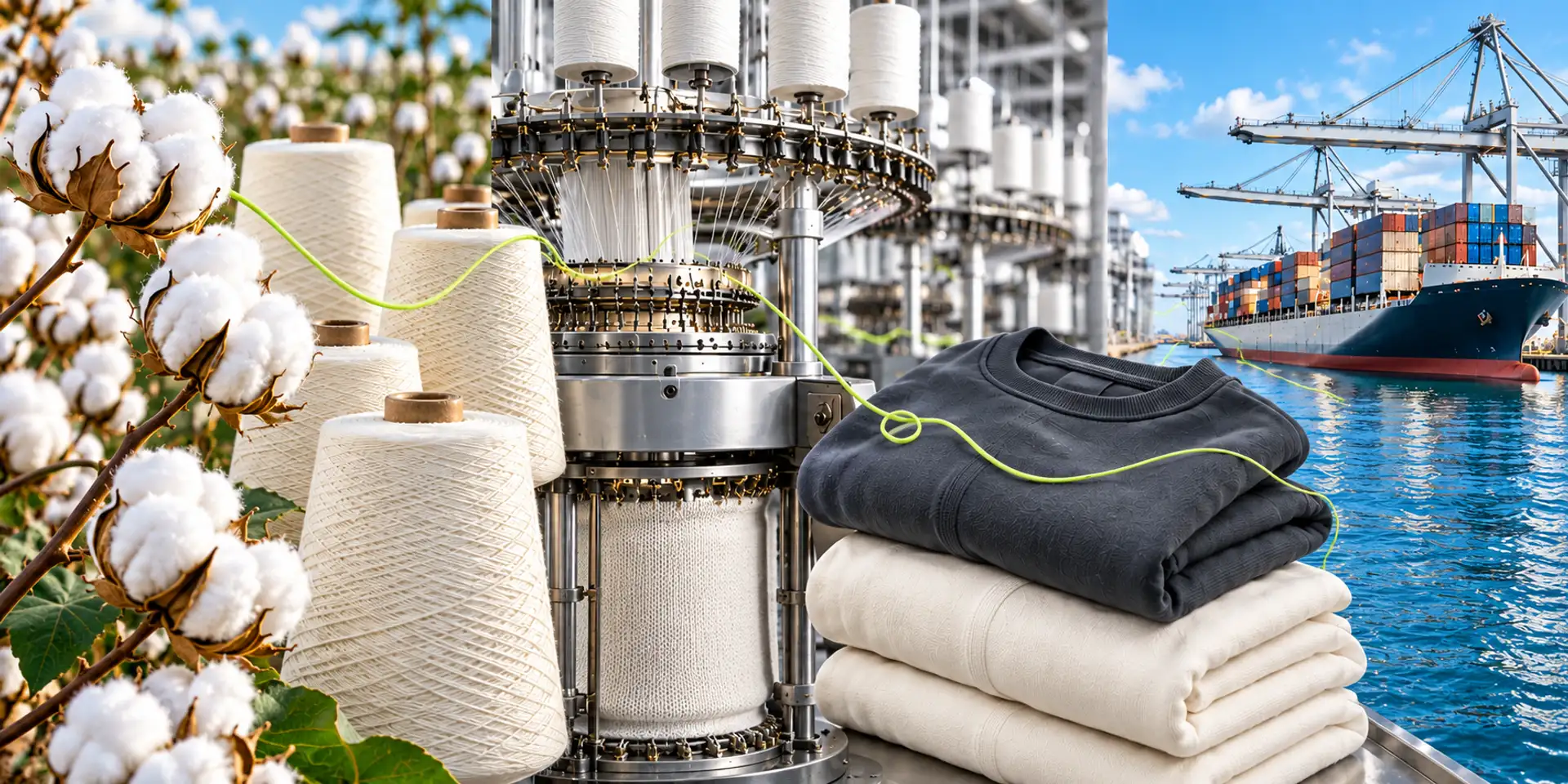
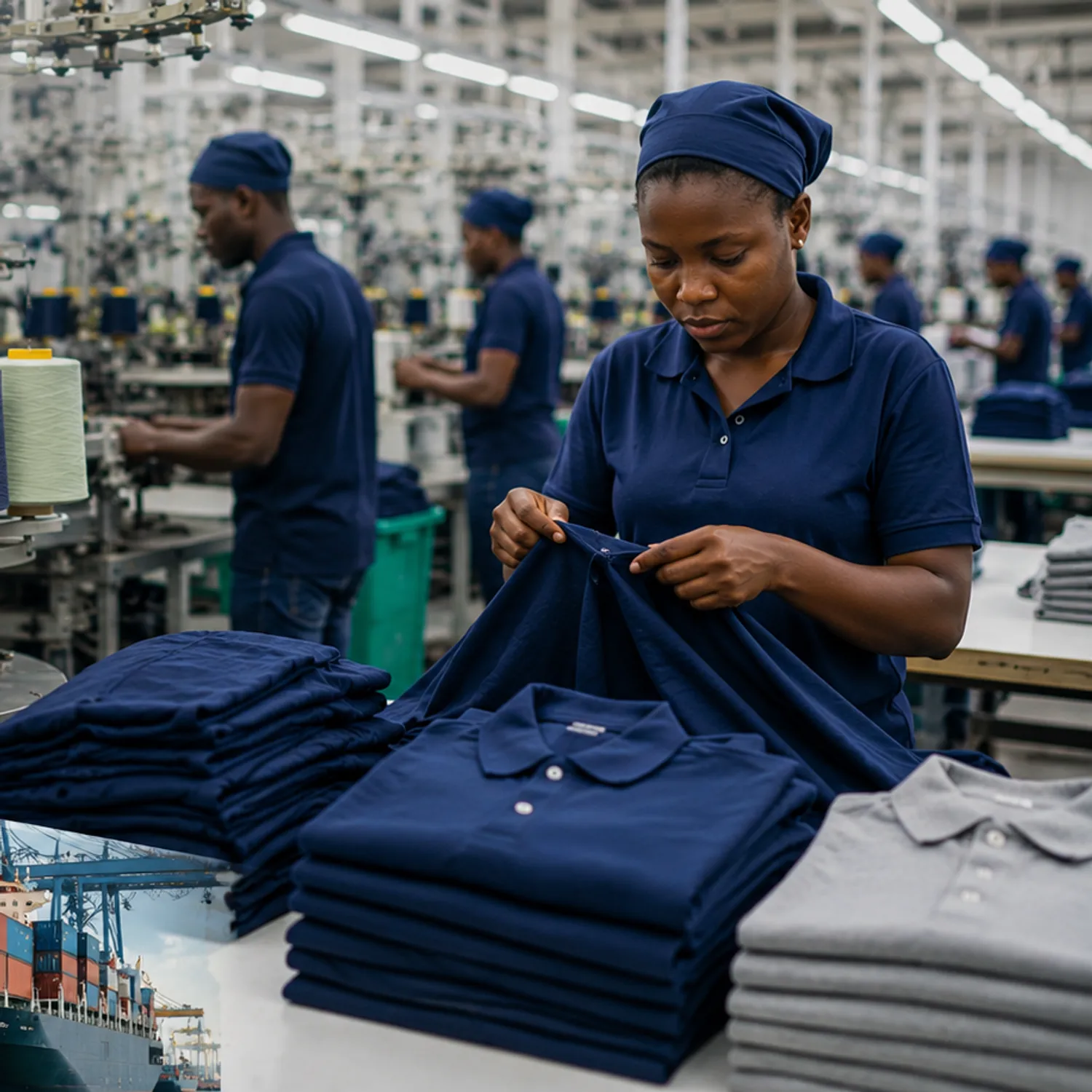
The journey from cotton to finished apparel involves several stages, each with its own production requirements. At BTC, it begins with locally sourced, rain-fed, non-GMO, CmiA-certified cotton, which is converted into yarn through spinning and then into fabric through knitting. The fabric is processed and prepared for garment production, with capabilities including printing and other finishes, before moving into garment manufacturing, embroidery and finishing. From there, finished apparel can move into the wider logistics network serving international markets.
At BTC, these stages are connected within a vertically integrated manufacturing operation. For buyers, the value is not simply that BTC offers multiple capabilities, but that more of the production journey can be managed within one connected ecosystem.
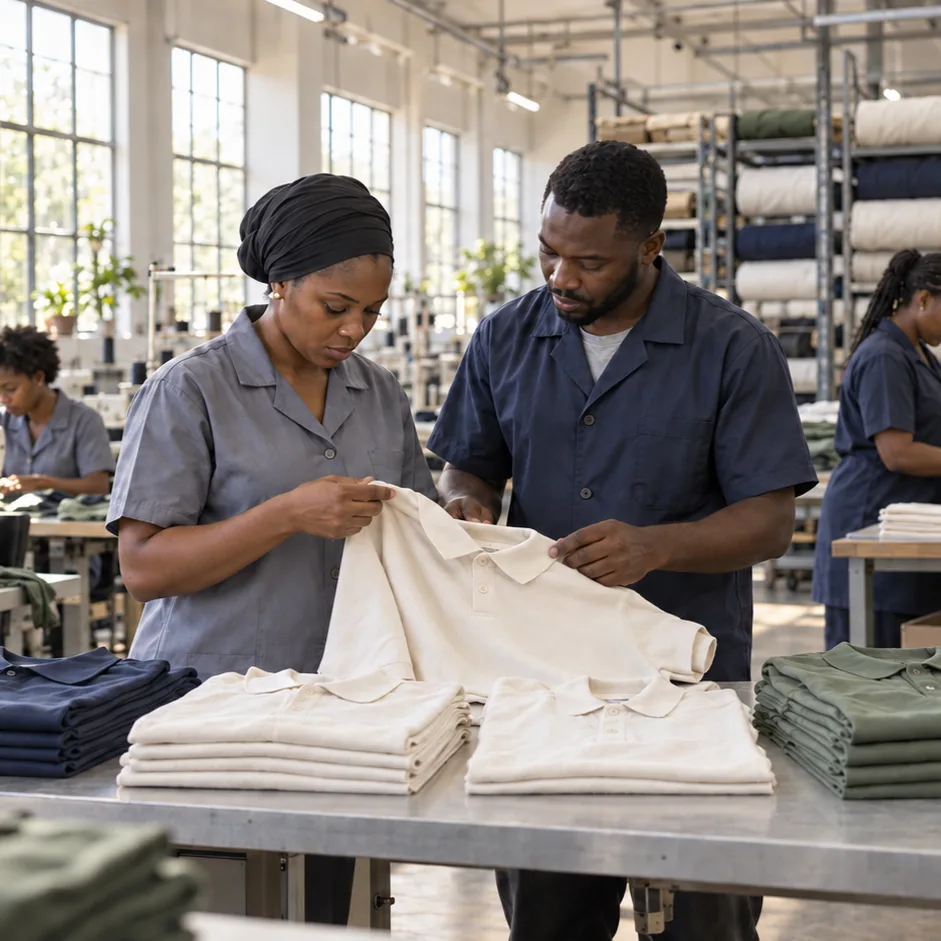
For sourcing teams, the practical value of integration comes down to how easily a production programme can be managed from one stage to the next. With more stages connected within one ecosystem, buyers can reduce the number of suppliers and handoffs involved in moving from raw material to finished apparel, while gaining greater visibility across production. Blockchain-enabled traceability can provide visibility across the manufacturing journey, while an integrated model can also support different designs, fabrics, finishes and garment requirements as product needs change. BTC has capacity for approximately 9,000 tonnes of knit fabric and 24 million apparel pieces annually, supporting substantial programmes and changing volume requirements. Automated design and 3D sampling capabilities can also support product development and iteration before production begins. Together, these capabilities can simplify coordination while giving buyers greater visibility across the manufacturing journey.
The manufacturing journey does not end when the garment leaves the production line. For apparel buyers, finished goods also need to move efficiently towards international markets.
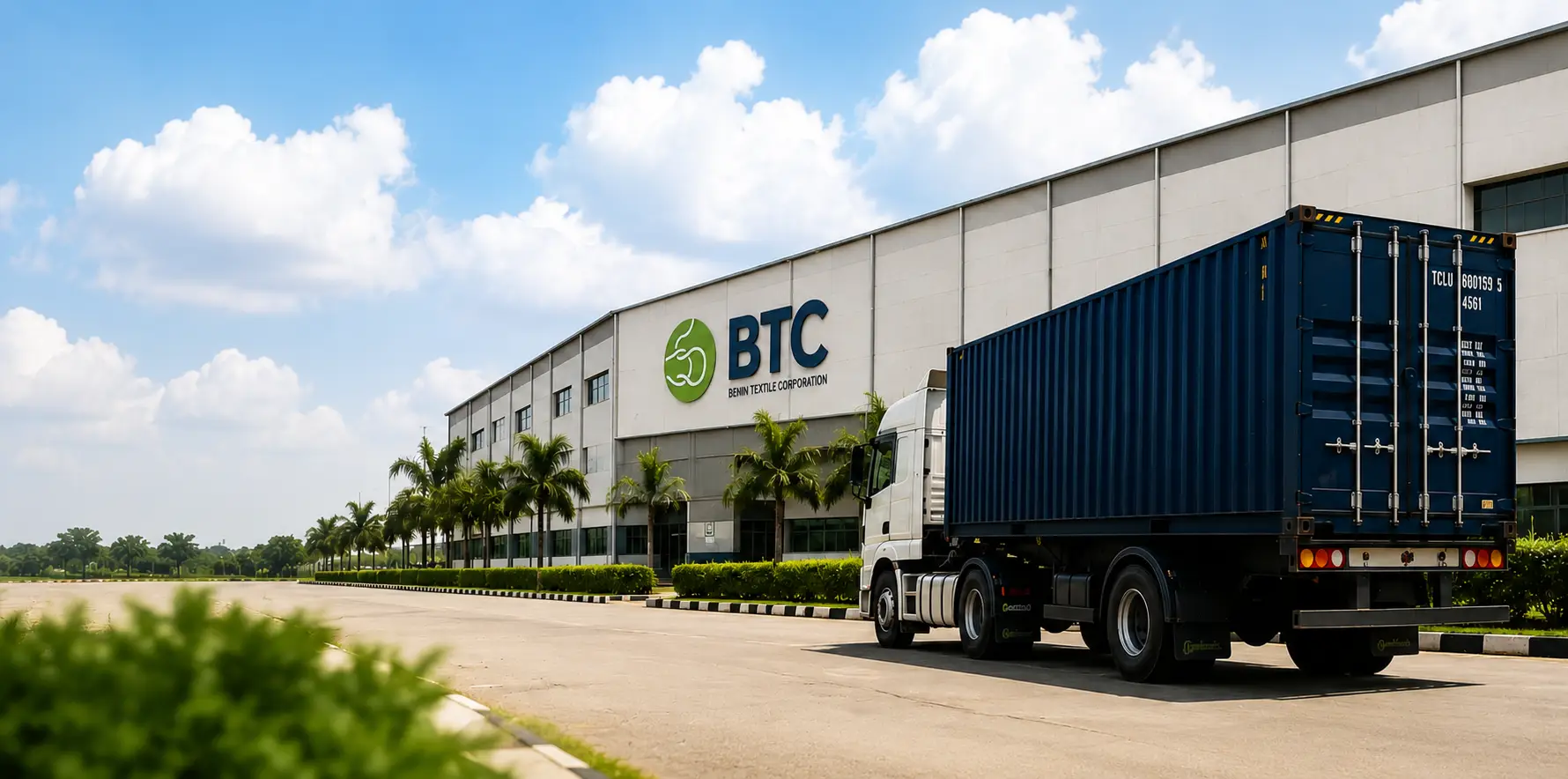
BTC is located within the Glo-Djigbé Industrial Zone (GDIZ), with access to sea, air and land connectivity. The facility is approximately 40 km from the seaport, while a dry port within the zone provides customs-clearance infrastructure. BTC also highlights air connectivity to key destinations in the US and EU.
This connectivity supports the movement of finished apparel into international supply chains, connecting manufacturing capabilities with the logistics routes needed to reach global markets.
BTC’s customer portfolio includes global apparel names such as H&M, C&A, Kiabi, Gémo and U.S. Polo Assn., reflecting its ability to support the requirements of established international apparel businesses.
As apparel supply chains become more complex, buyers are looking beyond individual production capabilities and considering how different stages of the manufacturing journey work together.
At BTC, that model connects Benin’s cotton with spinning, knitting, processing, garment manufacturing and finishing, supported by the wider infrastructure of GDIZ and connections to international markets.
For brands, retailers and buying houses looking to diversify sourcing or develop new apparel programmes, the model offers a way to connect more of the journey from source to finished garment within one manufacturing ecosystem.
Looking for a reliable manufacturing partner in Africa? Speak to the BTC team about your next apparel programme.
Curated for You
Contact Us

 Fr